Direct booking and hotel knowledge
Your hotel has seven versions. Your guest only gets one stay.
Tamaga Hospitality gives independent hotels an owned Drupal-native direct-booking foundation, or connects to the PMS and booking systems they already use. It keeps room fit, guest conditions, host action, and channel representations clear around one stay.
One physical hotel appears through seven representations. The connectors express relationship or reference only. One real stay remains the singular physical consequence.

Direct Booking
Structured Data
Google / Local
OTA / Distribution
Destination /
Partner WebAI Synthesis







One Real Stay
One Physical Hotel
- Website
- Direct Booking
- Structured Data
- Google / Local
- OTA / Distribution
- Destination / Partner Web
- AI Synthesis
One Real Stay
Where meaning breaks
Three failures a hotel should not leave to chance.
Wrong room
The room is available, but its beds, layout, access, or limits do not fit the guest's actual party. The mistake becomes physical at check-in.
Unresolved request
A guest asks for late arrival or another condition. “Received” is mistaken for “confirmed,” and the responsible host never receives the work.
Changed representation
A careful website condition becomes a stronger OTA, local-profile, or AI claim. The guest acts on certainty the hotel never gave.
How Tamaga carries the meaning
One connected path from approved fact to responsible action.
Tamaga keeps the consequential meaning and its ownership visible as it moves through the stay.
House Record
Establish the approved fact, condition, source, and owner.
Guest View
Help the guest understand whether the stay works before commitment.
Host Desk
Turn unresolved conditions into work a responsible person can see and resolve.
Channel Lens
Compare external or generated representations with the approved meaning.
Two deployment patterns
Use a Tamaga-owned path or connect the stack you already trust.
Tamaga provides a Drupal-native direct-booking foundation or adds governed hotel knowledge and request handling around established transactional systems. The authority boundary stays explicit in either mode.
- Tamaga-native direct booking
- An owned Drupal foundation brings hotel content, room search, availability, room choice, and the direct-booking journey into one adaptable platform.
- Connected Tamaga
- An existing PMS, booking engine, channel manager, or payment provider remains authoritative for availability, rates, reservation state, inventory, and settlement.
- Responsible people
- Conditional request confirmation, exception handling, and operational judgment remain visible and owned.
A broader Tamaga idea
Hospitality is the first productized expression of a broader Tamaga idea.
Tamaga calls the system underneath that knowledge travel knowledge infrastructure.
Working proof and current offer
See the platform working, or start with one real hotel promise.
Hotel Demo
Follow a family-room decision from availability and Room Fit through a conditional late-arrival request, Host Attention, and Channel Lens. Tamaga Hotel is fictional, and the public demonstration stops before personal information, reservation placement, or payment.
Seven-Version Snapshot
Request a manual, human-reviewed diagnostic of one consequential hotel promise across the representations a guest may encounter.
Latest from the Newsroom
Research, field notes, and releases for the work around the stay.
 Read the Research Briefing
Owned at the source. Interoperable at the edges.
Travel knowledge should be able to move without losing the source that can maintain, qualify and correct it.
 Read the Release
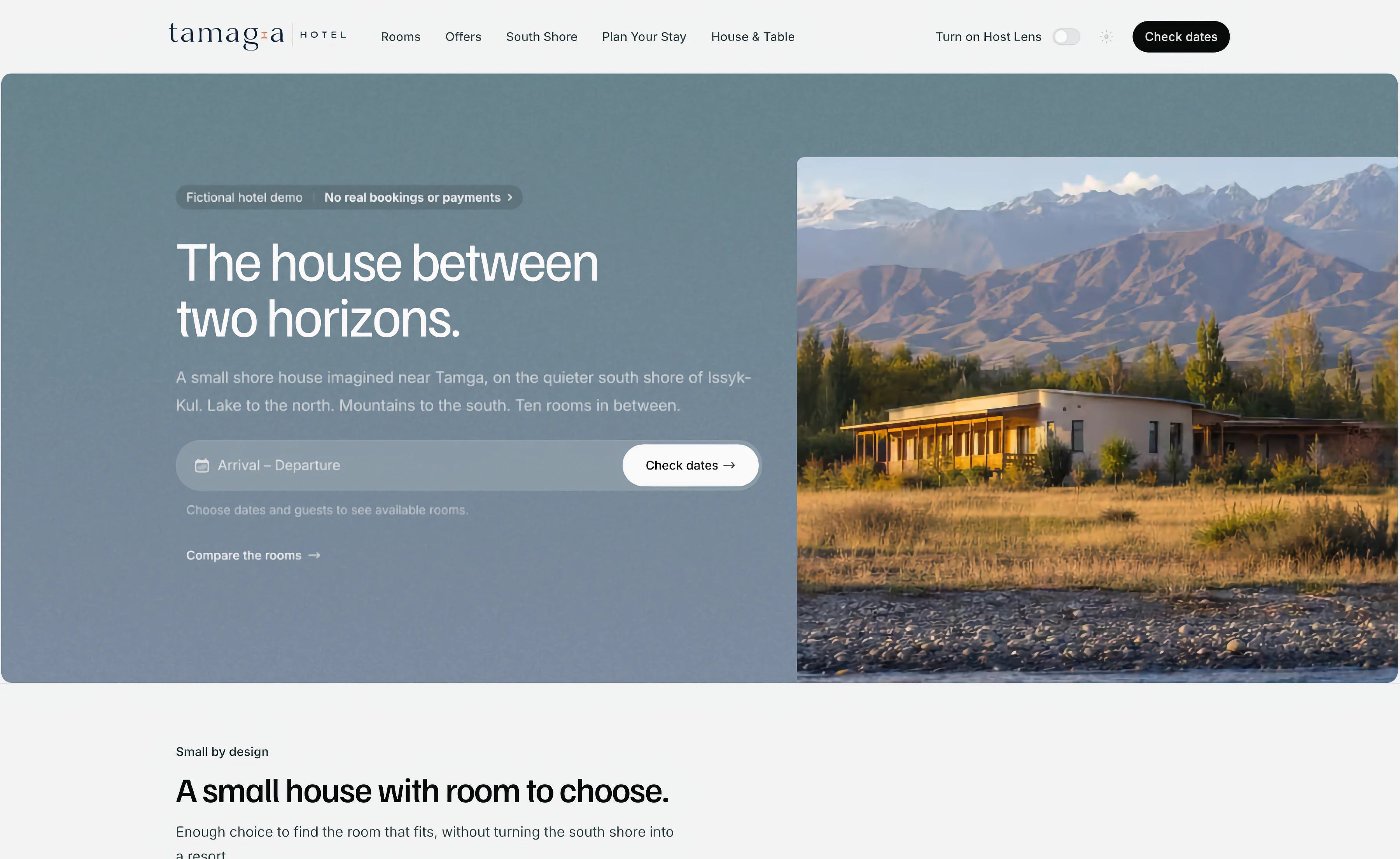
Tamaga releases a hotel that does not exist
Tamaga Hotel is a fictional reference environment with public guest-facing surfaces and a documented bounded release scenario showing what happens when a room does not fit, a request remains pending, a person still has to decide, or a representation loses an important condition.
 Read the Research Briefing
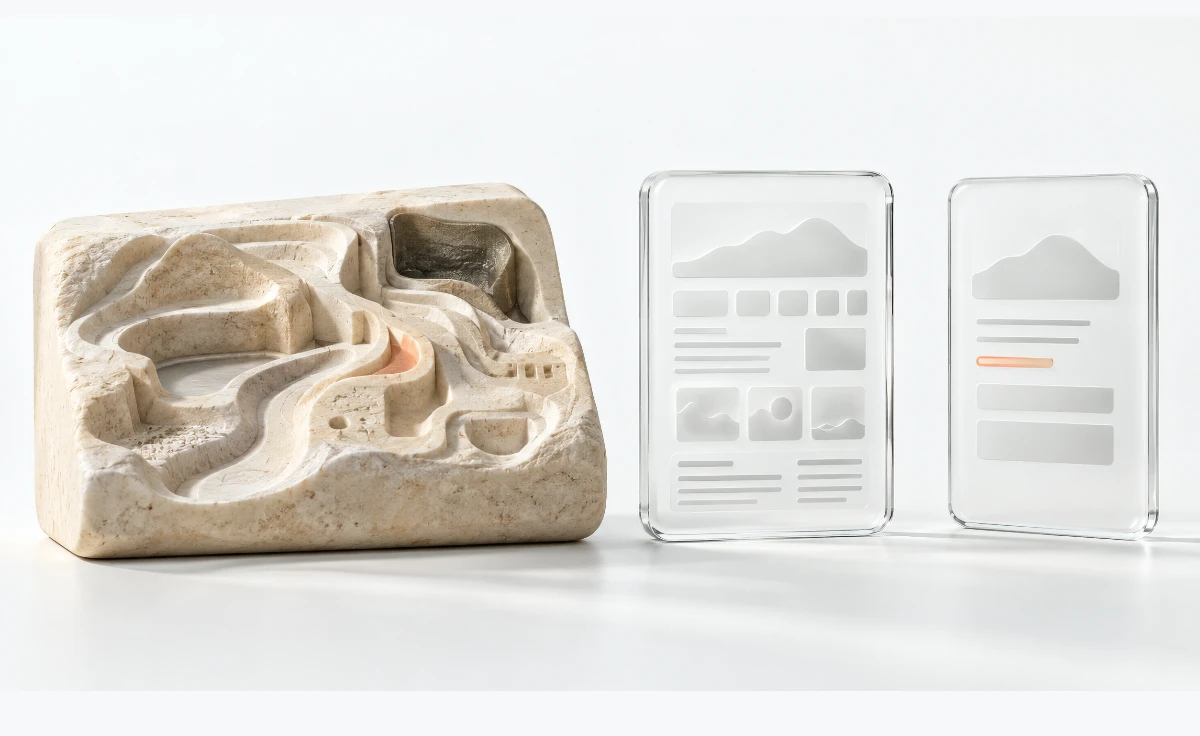
What can the travel internet safely forget?
Travel platforms have to compress places. The difficult question is which distinctions can disappear safely, which ones change a traveler’s decision, and when a representation has reached the limit of what it can establish.
Start with one promise
Which hotel promise would you trace first?
Choose one fact a guest cannot afford to misunderstand: room fit, late arrival, connecting rooms, accessibility, breakfast, parking, cancellation, or another consequential condition.