Skip to content
Founder of Tamaga

Dan Metille

I still build websites. I just no longer believe the website is the interesting part.

I work on how independent travel organizations can keep what they mean, what they know and what machines understand connected.

Semantic architecture · Schema.org-first Drupal · Independent tourism

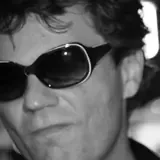
Dan Metille in sunglasses, photographed in black and white.

For almost thirty years, the tools changed. The question did not: how can a small organization keep control of the meaning and value of what it knows?

The building blocks I never stopped carrying

The building blocks changed. I kept asking the same question.

Looking back, the changes in my career make more sense to me as changes in what I thought the building blocks were.
  1. 1996Voice

    The web gave small organizations another way to speak.

    I went to India for a sabbatical year expecting, if I am honest, perhaps a little enlightenment. I came back in 1996 without the enlightenment but with a damaged career plan, which turned out to be more useful. After five years in communication and advertising, and a Federal marketing qualification, the early web seemed interesting because a small business could publish directly without first needing the budget, media access or permission that conventional communication usually required.

  2. 2010Journey

    The tour operator disappeared. The building blocks stayed.

    I had continued building websites, worked around tourism and hospitality marketing, studied psychology and gained experience as an incoming tour operator. In 2010 I moved to Kyrgyzstan intending to start a tour operator built partly around the modular building-block idea I had seen in India. A revolution began a few days after I arrived. It was not a particularly clever moment to launch a tour company. So I stayed, learned Drupal and started building websites again: restaurants, pubs and nightclubs in Bishkek, before Instagram absorbed so much of that digital role.

  3. 2012Platform

    A website began turning into an operating system.

    Nomad's Land became the main turning point. What began as the owner's self-built website gradually became something much harder to call a website: destinations, journeys, multilingual content, travelers, partners and operational processes started becoming parts of the same system. Work with WTK / Helvetas and other tourism projects added the same lesson from different angles. The interface was becoming the least interesting part of the work. BlueMelon was where the craft accumulated: Drupal builds, tourism platforms, structured content, SEO, multilingual systems and client projects. Tamaga did not replace that history. It emerged from it when the recurring problem became clearer than the medium used to solve it.

  4. ~2023Entity

    Things before pages.

    jrockowitz's Schema.org Blueprints work changed something fundamental for me. Instead of asking first which pages a site needed, I began asking which things actually existed and how they related: a hotel, a room, a place, an offer, a person, an image. I became rather enthusiastic about Schema.org, which is perhaps not the most exciting sentence ever written about a professional turning point, but the work genuinely changed the way I understood a website. Once you start thinking that way, it becomes difficult to go back to a website made primarily of page types.

  5. 2026Authority

    Machine-readable was not enough.

    Laurent Bourrelly's work around semantic cocoon, audience and branding pushed me back toward the human side of the problem: what does the organization want to mean, and what does the traveler actually need to decide? Christian Méline's work around semantic language sharpened another part of it: words drift, especially when teams, markets and machines start reusing them. LLMs and AI-assisted discovery made the missing layer impossible for me to ignore. The website may be canonical, but the final answer about a hotel, route or destination can now be assembled somewhere else. Who established this fact? Under which condition? Who can change it? Who still has to say yes?

I thought the building blocks were pages. Then journeys. Then entities. Now I think the important blocks are meaning, decisions, entities, sources, conditions and responsibility.

Tamaga is where I am trying to make those blocks into infrastructure.

What I am trying to solve now

Questions I am working on now.

  1. 01

    How can an independent travel organization remain the clearest source about itself?

    Independent knowledge should remain close to the people who can correct it, even when platforms and AI systems make the final answer somewhere else.

  2. 02

    How do traveler decisions and machine-readable entities stay connected?

    A useful entity graph is not separate from the traveler. It should help connect brand meaning, structured data and the decision a person is actually trying to make.

  3. 03

    What should Schema.org express, and where should its responsibility stop?

    Schema.org can describe a public edge, but markup is not authority. The visible claim, its source and the operational fact behind it still need their own boundaries.

    Inspect the authority model
  4. 04

    How do we keep semantic strategy alive after the workshop ends?

    I do not want semantic strategy to survive only as a workshop deck. I am testing how the Travel Platform Blueprint can become entities, registries, workflows, review states and software inside Drupal.

    A strategy that only exists in a presentation is not much of a strategy.
A biography you can inspect

What I know. What I am testing. What I still don't know.

What I know from practice

  • Serious travel knowledge rarely lives in pages alone.
  • In my Drupal work, entity-first models have proved more durable than markup maintained separately after the fact.
  • Conditions such as on request break easily across handoffs.
  • Across the independent travel organizations I have worked with, the people routinely know more than the platform can expose or maintain.

What I am testing

  • Representation Integrity for travel businesses.
  • Travel Platform Blueprint as a working method.
  • A governed knowledge layer in Drupal.
  • Tamaga Hospitality Promise patterns and the Outseason travel Lab.

What I still don't know

  • How much of the Blueprint should become an open specification.
  • Which semantic patterns transfer cleanly from hospitality into DMCs and destinations.
  • How far AI agents should be allowed to act on governed travel knowledge.
  • Which parts need standardization and which should remain local judgment.
Work that changed my thinking

Four kinds of work. Four different lessons.

Client platform · long-running implementation2012–present

Nomad's Land

A travel platform where destinations, journeys, multilingual publishing, traveler workflows, partners and operational knowledge meet.

What it taught me: It taught me that a travel website can gradually become part of the operating system.

Inspect Nomad's Land
Tourism consulting · public media infrastructureKyrgyzstan

Winter Tourism in Kyrgyzstan

Work around destination ecosystems, media, image rights, tourism communication and local organizations.

What it taught me: Infrastructure can also mean giving other people usable material, not only publishing another site.

Inspect the WTK Library
Fictional reference implementationCurrent Lab

Tamaga Hotel

A controlled environment for House Record, representation integrity, request versus confirmation, Schema.org and Host Desk patterns.

What it taught me: A fictional environment can isolate failure modes safely, but it is not client proof.

Inspect the Hotel Demo
Internal travel LabCurrent project

Outseason

A travel project for testing categories, routes, seasons, hosts, omissions, sources and AI-assisted review.

What it taught me: The same infrastructure problem extends beyond hotels into routes and destination knowledge.

Inspect Outseason

Other tourism work includes specialist outdoor and destination projects in Switzerland and Kyrgyzstan, including Nendaz Parapente and related BlueMelon work.

People whose work changed mine

I did not arrive here alone.

jrockowitz

Schema.org Blueprints and Schema.org-first Drupal architecture changed how I think about things, relationships and pages.

Laurent Bourrelly

Semantic cocoon, audience thinking and branding helped move the question from keyword and page thinking toward decision structures.

Christian Méline

Semantic language and concept discipline sharpened my attention to lexical drift and the continuity of meaning.

Read, follow, inspect

Where I write, argue and build.

Read

  • Schema.org markup is not the source of truth

    A Research Briefing on representation integrity: why valid machine-readable data can still lose a condition a traveler or staff member needs to rely on.

    Read the briefing
  • One Hotel, Seven Versions

    Public-source research into how important hotel facts change across the modern travel web.

    Read the research
  • Tamaga Newsroom

    Research and method notes as they become ready for public reading.

    Visit the Newsroom

Follow

  • LinkedIn

    Professional observations, implementation lessons and the business consequences of the work.

  • Substack

    Longer letters on travel, platforms and who gets to define what a place means.

  • X

    Questions, arguments and ideas while they are still being worked out.

Inspect

Useful details

For introductions, media and citations.

Short bio

Dan Metille is the Swiss founder of Tamaga, based in Kyrgyzstan. He has worked with Drupal since 2009 and has spent more than fifteen years building tourism platforms, multilingual systems and operational tools. His current work focuses on travel knowledge infrastructure: connecting brand meaning, traveler decisions, structured entities, Schema.org, sources and operational authority for independent tourism. Earlier work through BlueMelon includes long-running DMC, destination and specialist tourism projects in Switzerland and Kyrgyzstan.

Speaker and interview topics

  • Travel knowledge infrastructure
  • Schema.org and tourism
  • Semantic architecture for travel platforms
  • Drupal for complex tourism systems
  • Independent travel knowledge and AI
  • Hospitality representation integrity

Citation: Dan Metille, founder of Tamaga, works on travel knowledge infrastructure, semantic architecture and Schema.org-first Drupal for independent tourism.

A place for the method

If this is your problem too.

Tamaga is where I am turning these questions into methods, software and real implementations, starting with independent hospitality and extending from there across tourism.